


Quick Answer
The method depends on what audio source you want to capture and your operating system:
- • Best Overall (System Sound & Mic): VideoSolo Screen Recorder captures high-quality system audio and microphone sound simultaneously or separately on both Windows and Mac with noise cancellation.
- • Best Free Option: Use Audacity to record multi-track audio with rich sets of audio editing.
- • Quick Web-based Recording (No Install): Use Online Voice Recorder directly in your browser for fast, mic-only audio capture.
Recording computer audio is essential for creating tutorials, podcasts, gaming streams, or preserving online content. If you’re struggling with how to record audio from a computer, you've come to the right place. This post brings you the five best ways to record computer audio on Windows, on Mac, and online. Moreover, in-depth reviews and tutorials are also included. Now, pick a preferred way to record audio from your computer.
- First Look: Comparison of 5 Tools to Record Computer Audio
- Ultimate Solution to Record Audio from Computer [🏆]
- Using Microsoft Voice Recorder [Windows]
- With QuickTime Player [Mac Built-in]
- Record Computer Audio Via Online Tool
- Using Third-Party Audio Recorder Audacity [Free]
- Bonus: How to Record Computer Audio in High Quality
- FAQs on Recording Computer Audio
First Look: Comparison of 5 Tools to Record Computer Audio
How We Test
In order to verify the recording performance of these five tools, we chose the song “Cruel Summer” by Taylor Swift as the test track. The recordings were taken using the same Windows 11/Mac testing equipment, equipped with a Shure SM7B microphone and a Focusrite Scarlett 2i2 sound card.
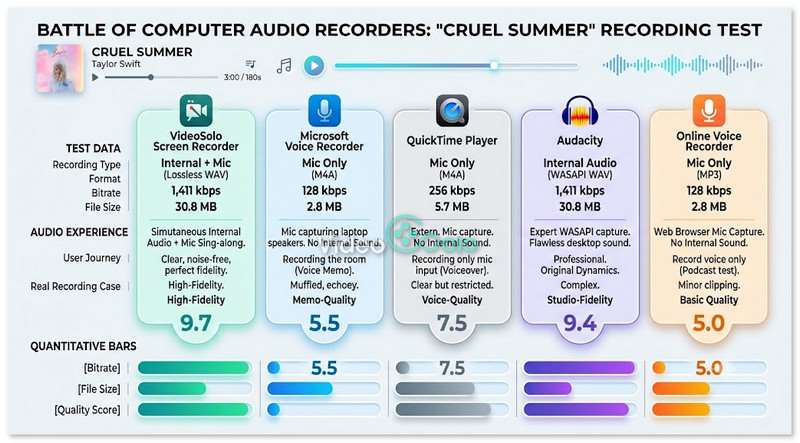
Here comes a comprehensive comparison of these 5 ways to record computer audio. Now, let's walk through the table before making a choice.
| VideoSolo Screen Recorder | Microsoft Voice Recorder | QuickTime Player | Audacity | Online Voice Recorder | |
|---|---|---|---|---|---|
| Audio Format | MP3, M4A, WMA, AAC, WAV, and FLAC | M4A | M4A | WAV, AIFF, MP3, AU, FLAC, and Ogg | MP3 |
| Audio Quality | Lossless Quality | Lossy | Lossy | High Quality | Lossy |
| Record Microphone | √ | √ | √ | √ | √ |
| Record Media Audio | √ | × | × | √ | × |
| Record Screen | √ | × | √ | × | × |
| Record Webcam | √ | × | √ | × | × |
| Real-time Annotation | √ | × | × | × | × |
| Editing Feature | √ | × | × | √ | × |
| Cut Video | √ | √ | √ | √ | √ |
| Easy to use | √ | √ | √ | × | √ |
Ultimate Solution to Record Audio from Computer [🏆]
Best For: All-in-one Audio recorder and editor for capturing lossless system sound and microphone audio on your computer.
VideoSolo Screen Recorder is an all-in-one recorder that caters to all your recording needs, let alone record computer audio from a microphone or system sound. The recordings can be saved into popular formats like MP3, M4A, WMA, AAC, WAV, and FLAC of up to lossless quality.
Better yet, you can apply noise cancellation and voice enhancement if you want to record a microphone. When done recording, you are able to trim, compress, and convert the audio file if needed.
 More Sparkling Features to Explore
- 20+ Recording Modes Supported – Audio Recorder, Video Recorder, Game Recorder, Webcam Recorder, Phone Recorder, and many other modes for any scenario.
- Lossless Video and Audio Quality – The recordings can be exported with lossless quality at up to 60fps.
- Music Recorder for All Platforms – VideoSolo Screen Recorder enables you to record online HD music from Spotify, YouTube Music, SoundCloud, etc.
- Real-Time Annotation – When recording a video, you can add text, lines, arrows, callouts, images, and highlights to make a pro tutorial video.
- Recording Without Interruption – You can set a fixed window to start recording and avoid any unexpected disturbance during recording.
- Advanced Post-Processing Tools – Utilize editing tools to cut, crop, compress, or convert the recording with ease.
VideoSolo Screen Recorder is easy to use and compatible with both Windows and macOS systems. Let's learn how to record audio from a computer in a few steps.
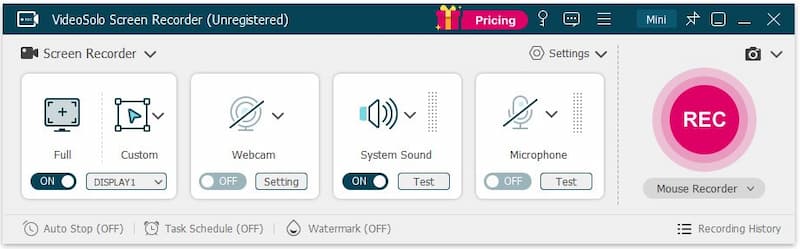
Step 1. Click "Audio Recorder" on the Main Interface
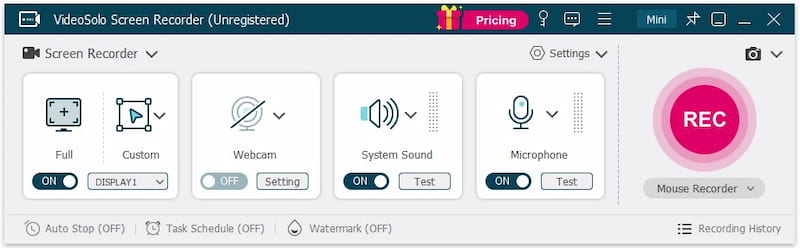
Launch VideoSolo Screen Recorder after the installation. To record computer system audio, click “Audio Recorder” on the main interface when the program is launched.
It's noted that you need to install an audio driver when recording audio if you're using a Mac.
Step 2. Set Proper Recording Volume
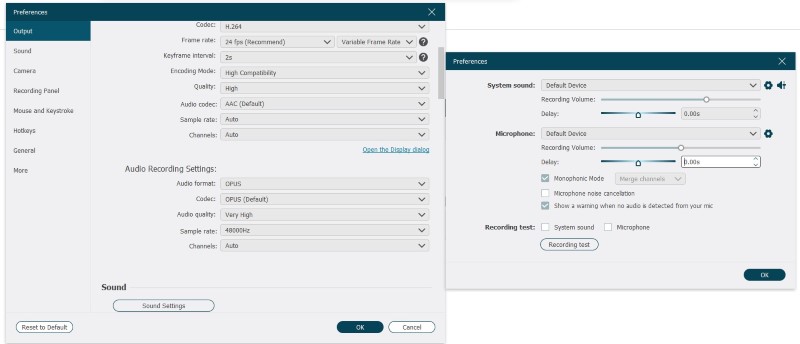
Before recording, you can adjust the appropriate system sound and perform a sound test to get ready.
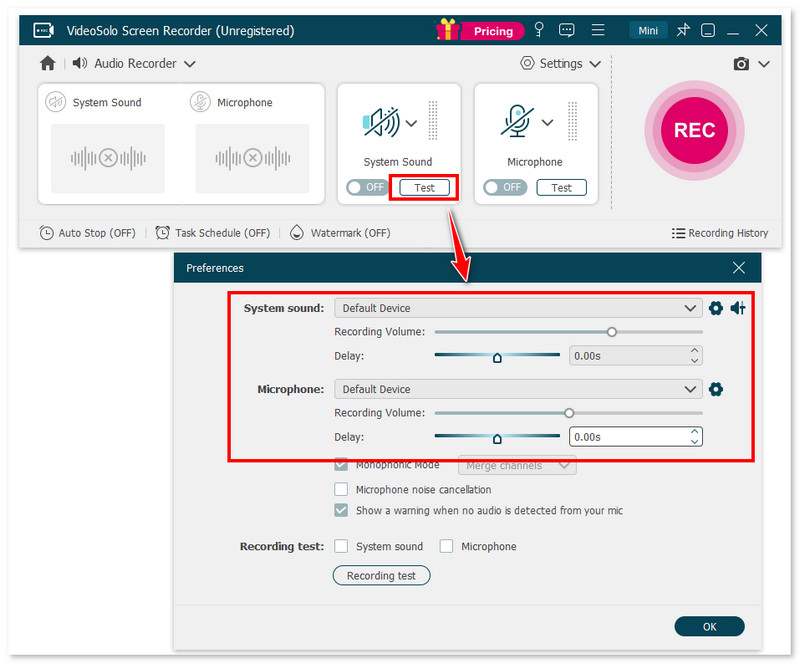
- If you just want to record sound from computer, you'd better turn off the microphone to avoid unnecessary noises.
- If you want to record microphone sound from a computer, it's recommended to enable noise cancellation and microphone enhancement to ensure better and clearer audio quality.
Step 3. Modify Output Settings (Optional)
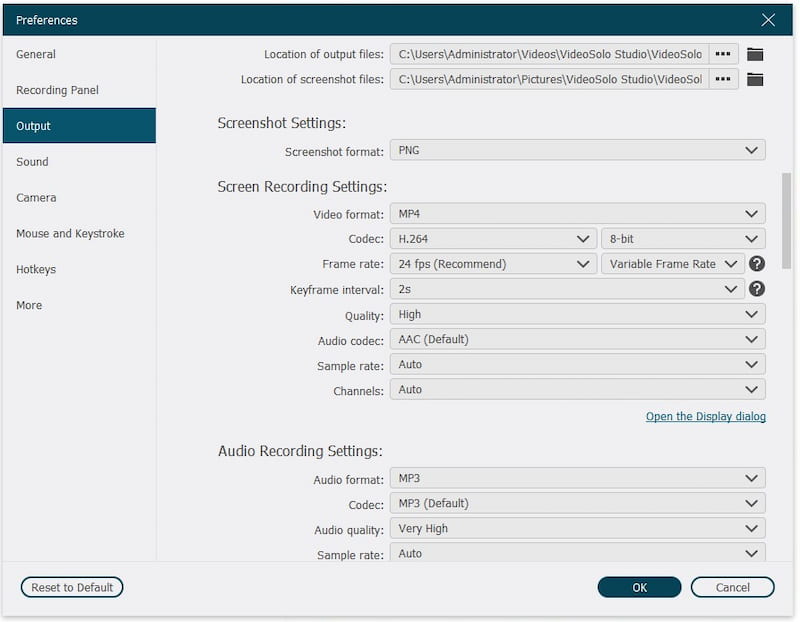
In the output tab, “MP3” & “High” are selected by default and you can easily modify them to WMA, M4A, AAC, and lossless in Windows.
In the Mac version, the output formats are MP3, M4A, WMA, CAF, FLAC, OGG, and OPUS.
Step 4. Click "REC" to Start a Recording
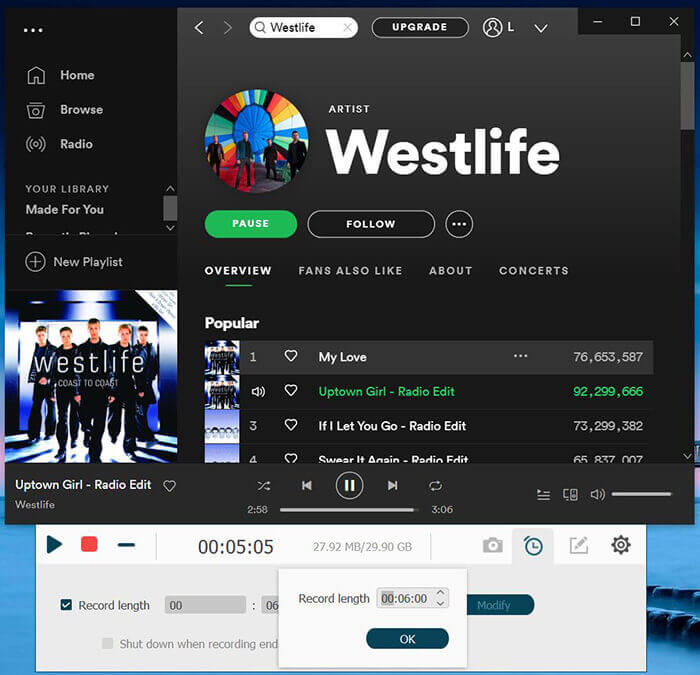
To avoid missing a few seconds at the beginning of the audio, you'd better start the recording first by clicking the “REC” button and then turning on the audio playing on your computer.
Use the "Trim" feature to remove the unwanted part from the recorded audio track. Click the "Pause&" "Stop", "Set record length", and "Option" buttons to control audio recording.
Step 5. Preview and Clip Computer Audio Recording
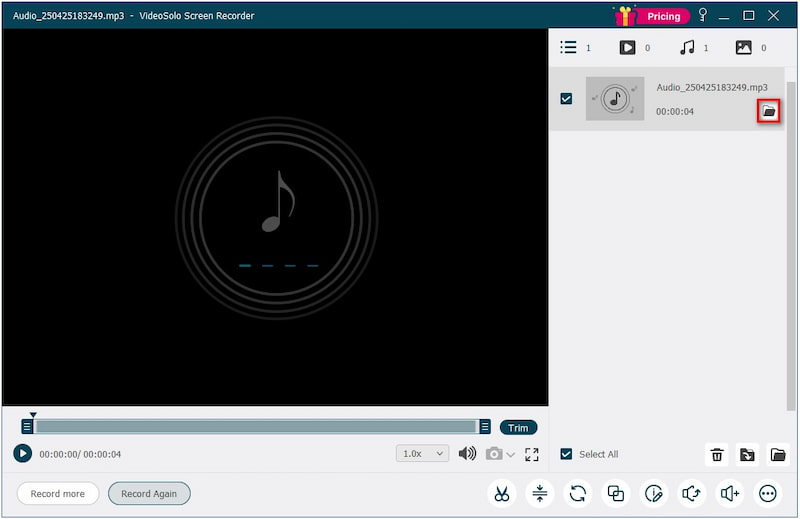
Once you stop recording, you enter a preview window. Click the Open Folder button, and you'll find the recorded audio file saved automatically on your computer.
 pros
pros
- Record audio and sound from a computer to MP3, M4A, WMA, AAC, WAV, and FLAC of up to lossless quality.
- Provide 20+ recording modes for any scenario without a watermark.
- Record online streaming music and videos from any site.
- Allow real-time editing tools in the process of recording.
- Compatible with Windows 11/10/8/7/XP and MacOS X 10.12 and above.
- Set up a scheduled recording to auto-stop at a specific time.
- Lock a window to exclude other windows/apps.
- Offer all-featured tools to post-process your recordings.
 Cons
Cons
- Paid software with a free trial.
Evaluation Feedback
I set up a scheduled recording based on the song’s duration. I selected WAV (lossless) as the audio output format. To my surprise, the audio quality was excellent, the bitrate reached 1,411 kbps. I also tried turning on the microphone while the song was playing on my computer to test if the noise was disruptive. Luckily, the program automatically processed noise reduction and eliminated something like wind breath noise.
Using Microsoft Voice Recorder [Windows]
Best For: Quick voice memos and note-taking using a built-in microphone on Windows PCs.
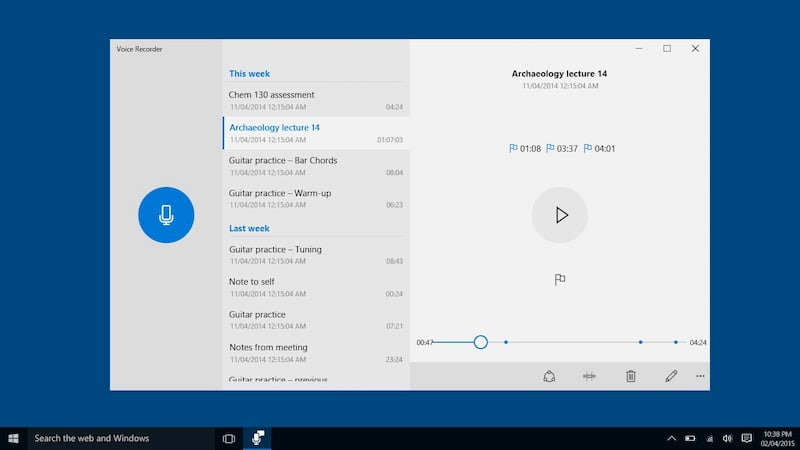
Note: Microsoft Voice Recorder, the internal audio recorder for PCs, is the easiest way for Windows users to record computer microphone. All you need to do is to check your computer microphone accessibility and capture your voice.
This tool only works for microphone recording, and it doesn't capture any internal audio playing on your computer. Also, the default audio format is encoded in M4A with the inability to choose another preferred audio format.
Step 1. Check your Microphone
Before recording your audio, make sure that your microphone is turned on. Open System Settings and go to the Input tab. Choose your microphone from the drop-down menu and set the volume.
Step 2. Open Windows Voice Recorder
Click the Start menu and search for Windows Voice Recorder in the search bar. Then open the app.
Step 3. Start Audio Recording
The recording icon is in the middle center. Hit it and start recording. When you finish your recording, the file will be automatically saved in the Sound Recordings folder.
pros
- Free and easy to use without any fee.
- Preinstall in the Windows operating system.
Cons
- Record sound from the computer microphone in M4A only.
- Do not enable you to select other recording inputs.
- Do not capture the screen or webcam.
- Cannot trim or crop the audio after recording.
- Only available in Windows 11/10/8/7.
User Review
You can start a recording or resume a paused recording in one click. Recordings are auto-saved and stored in the target Documents folder for easy access. But you can feel a significant delay between the time you press record and the beginning of recording. No way to trim audio files to account for the delay. Sometimes, when you click the blue microphone icon, happen anything! Worse, this tool is too unstable to open normally. I found it doesn't work anymore on Windows 10, although I have tried to reinstall it again.
With QuickTime Player [Mac Built-in]
Best For: Hassle-free mic recording and casual voiceovers on Mac without installing extra software.
Developed by Apple, QuickTime Player is not only a popular and free official Mac media player for any downloaded video or image, but also a powerful recorder. It can record your screen, record a movie with an inbuilt camera, or record computer audio with your internal or external microphone. Also, you can crop the audio file when done recording.
Note: The output format is set to M4A only, so you cannot export the audio to other formats, and the audio quality will be encoded at lossy 44.1 kHz AAC audio. Moreover, QuickTime Player cannot record sound from computer when you're playing a song or trying to record audio from a browser.
Step 1. Open QuickTime Player
QuickTime is a built-in software on your Mac device. You can search for it in your search bar and open it.
Step 2. Select “New Audio Recording”
Once you open the QuickTime Player, choose the “New Audio Recording” in the File list of the top-bar menu.
Step 3. Set Your Recording Volume
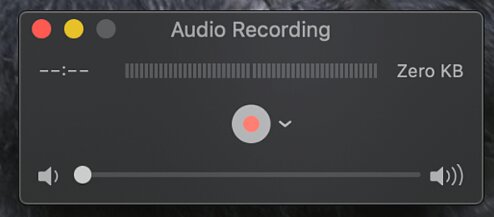
You can adjust the slider beneath your recording button to change the recording volume. QuickTime also allows you to adjust the recording quality by clicking the Drop Arrow next to the recording button.
Step 4. Click the Record Button and Begin Recording
After all the settings are done, you can click the red dot and begin the record. Once you're done, click the “Stop” icon. The file will be saved as an M4A file on your device.
pros
- Free to use on Mac and PC running Windows Vista or Windows 7.
- Easy to use with no need to download any software on Mac.
- Record your screen, webcam, and microphone sound.
Cons
- Discontinue by Apple for further updates.
- Export audio recordings to M4A only with lossy quality.
- Do not support Windows 8/10/11.
- Cannot record system sound on the computer.
 Tips
Tips
QuickTime can only record the audio of your microphone while screen recording. If you need to record system audio independently or any audio playing, you need a third-party audio recording software like VideoSolo Screen Recorder.
Record Computer Audio Via Online Tool
Best For: fast, zero-installation microphone captures directly in your browser for one-off tasks.
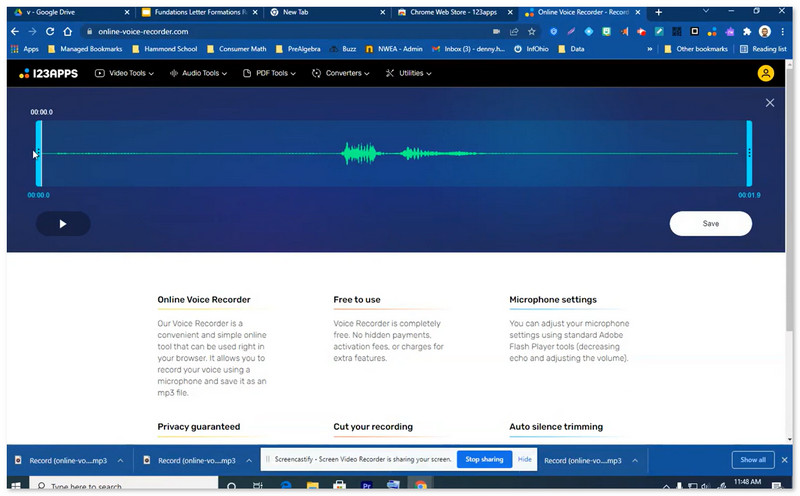
Except for an internal audio recorder for PC, Online Voice Recorder can also let you record browser audio online with no need to download any software. This online tool is available online and accessible with any browser on any device. Only by clicking on the button in the middle will it start recording the sound of your microphone and export the recording to an MP3 file.
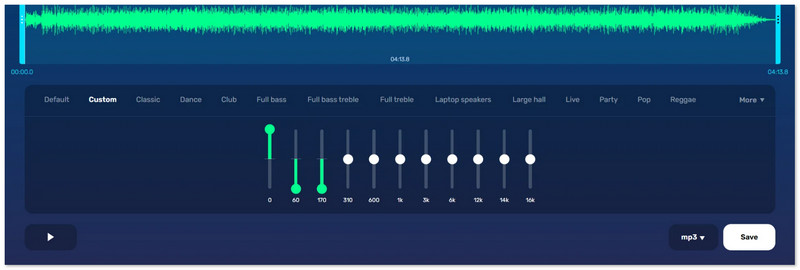
Moreover, the site offers many audio tools to make it easy for you to trim audio, change volume, change speed, change pitch, reverse audio, merge audio, and equalize the audio. Though the Online Voice Recorder claims that it'll never upload your recording to its servers, you may still have the risk of privacy breaches when using online recorder on computer.
Step 1. Open Online Voice Recorder
Search online voice recorder in your browser and open it.
Step 2. Microphone Settings
You can adjust your microphone settings by clicking the rightmost setting icon.
Step 3. Start Recording
After selecting the right microphone, you can begin your recording by hitting the red dot button. You can stop recording by hitting the Pause button. After you're recording done, hit the Red Square and finish recording.
Step 4. Trim and Save Your File
After recording, you can preview and trim your audio. The file will be directly saved to your device as an MP3 file.
pros
- Free to use without any fee.
- Easy to access online on any browser.
- Offer lots of audio tools for post-processing.
Cons
- Cannot record computer audio from media or browser.
- Cannot record a video with an in-built camera.
- There is a risk of privacy leakage.
- Require login to use the service.
- Support the output format in MP3 only.
- Tend to get unresponsive from time to time.
User Review
It sounds all clear and fine when I play the audio on the website itself. But then once I save the audio file to my laptop after I'm finished equalizing it, I notice it sounds a bit distorted. I tried saving it as an .mp3 file and then tried.m4a and .wav files, but they all still come out sounding a bit distorted after I finished adjusting the bass level to my liking under the equalizer feature.
Using Third-Party Audio Recorder Audacity [Free]
Best For: advanced multi-track audio recording, deep editing, and technical sound production for podcasters and creators.
Audacity is one of the best open-source and completely free audio recording software for computers. It enables you to record live audio through a microphone or sound from other media to WAV, AIFF, MP3, AU, FLAC, and Ogg Vorbis audio formats with high-quality resampling and dithering. You can also record multiple channels at the same time.
After that, you can cut, copy, paste, and delete multiple soundtracks if necessary. Better yet, you can add extra plug-ins and effects to adjust and preview your audio recording in real time.
Step 1. Download and open Audacity
Navigate to the Audacity website to download and install the software.
Step 2. Setting the input and output devices to record the audio.
You need to set the correct input and output device before your recording. Go to the "File" and then choose "Preferences" to do your settings. For Mac devices, you just click "Preferences" in the Audacity interface.
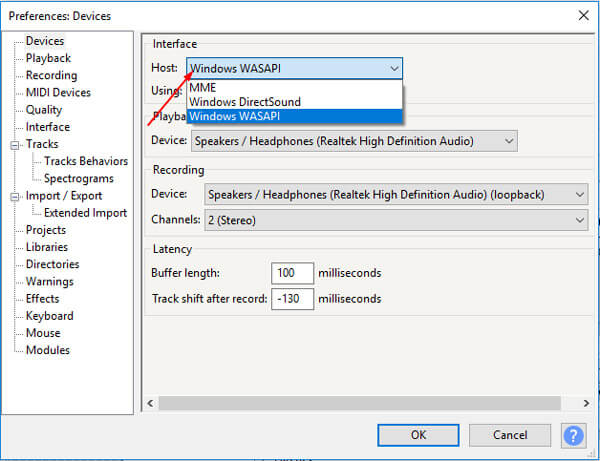
Note: If you're using Windows devices to record sounds, you need to select the "Windows WASAPI" option as the audio host.
Step 3. Start recording and save your audio file.
Click the "Record" button to start recording after all the settings, and hit "Stop" to finish. Once you finish, Open the File tab and find the "Save Project", click to save your files. If you don't want to do extra editing for your audio, just click "Export" in the "File" menu to export your files.
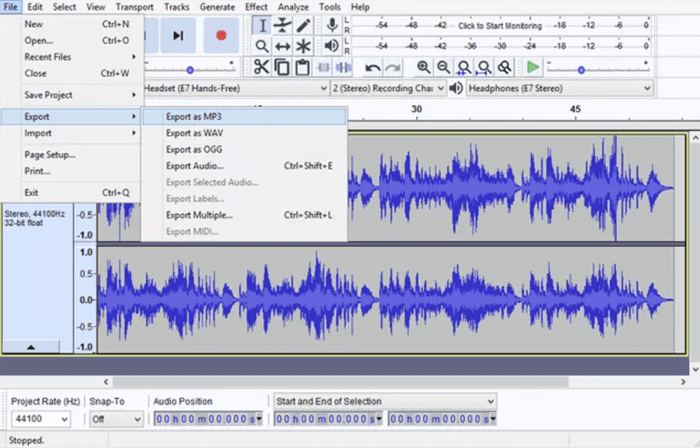
With Audacity, you can further fine-tune the performance of your audio. However, all these bells and whistles make it challenging to get down to Audacity and record computer audio with it for new starters. In this respect, VideoSolo Screen Recorder does better with a clear and easy-to-go interface and additional screen and web recording features.
pros
- Free and open-source for Windows, Mac, and Linux.
- Record audio from a computer on media or with a microphone.
- Export recordings to different formats in WAV, AIFF, MP3, AU, FLAC, and Ogg Vorbis.
- Support high-quality audio recordings at sample rates up to 384 kHz.
- Support audio editing features like cutting, adding effects, and plug-ins.
Cons
- Difficult to start for a new beginner.
- Cannot record onscreen activities or webcam.
- Cannot add real-time annotation during recording.
Bonus: How to Record Computer Audio in High Quality
1.Environment Optimization:
Select a quiet, acoustically controlled space. Disable devices like fans, printers, or notifications to eliminate unexpected disruptions.
2. Hardware Setup:
Prioritize external mics for studio-grade results. Built-in laptop microphones are prone to distortion and ambient noise.
3. Software & Settings
Choose professional software. Use tools like Audacity, Adobe Audition, or VideoSolo Screen Recorder to capture audio.
4. Recording Best Practices
Record a 30-second sample to check clarity and adjust settings before the main session. When recording, use closed-back headphones to catch any sound issues in real time.
5. Post-Production Enhancements:
After recording, trim pauses and normalizes volume to boost mid-range frequencies for clearer vocals.
FAQs on Recording Computer Audio
Q1: Can I record system sound and microphone audio at the same time?
A: Yes, but it depends on what tool you have. Some audio recorders such as QuickTime Player and Online Voice Recorder can only record microphone audio individually and are unable to capture internal desktop sound. To record both sources together, you need a full-featured tool like VideoSolo Screen Recorder, which allows you to capture internal system audio and microphone sound simultaneously or save them into separate audio tracks.
Q2: Why can’t QuickTime Player record internal system audio on Mac?
A: Apple enforces strict system privacy and security protection, preventing native apps from directly capturing system sound output. QuickTime only supports microphone inputs unless you install third-party audio drivers or virtual soundcards (like Soundflower or BlackHole) to route system sound.
Q3: What is the best format for recording high-quality computer audio?
A: For uncompressed, studio-grade quality, export your recordings as WAV or FLAC (up to 48kHz/24-bit). If you need smaller file sizes with great playback compatibility for daily use, MP3 or M4A (AAC) at 256–320 kbps is better.
Conclusion
If you wonder how to record audio on PC without microphone, you can choose either Audacity or VideoSolo Screen Recorder. However, if you want a one-stop recorder for any recording needs, VideoSolo Screen Recorder stands out with 20+ recording modes and the ability to record lossless audio and video on your computer. Give it a shot and you'll need no more recorder.
More Readings
Capture screen activities, audio, webcam, gameplay, and mobile screens on Windows and Mac with high quality.

